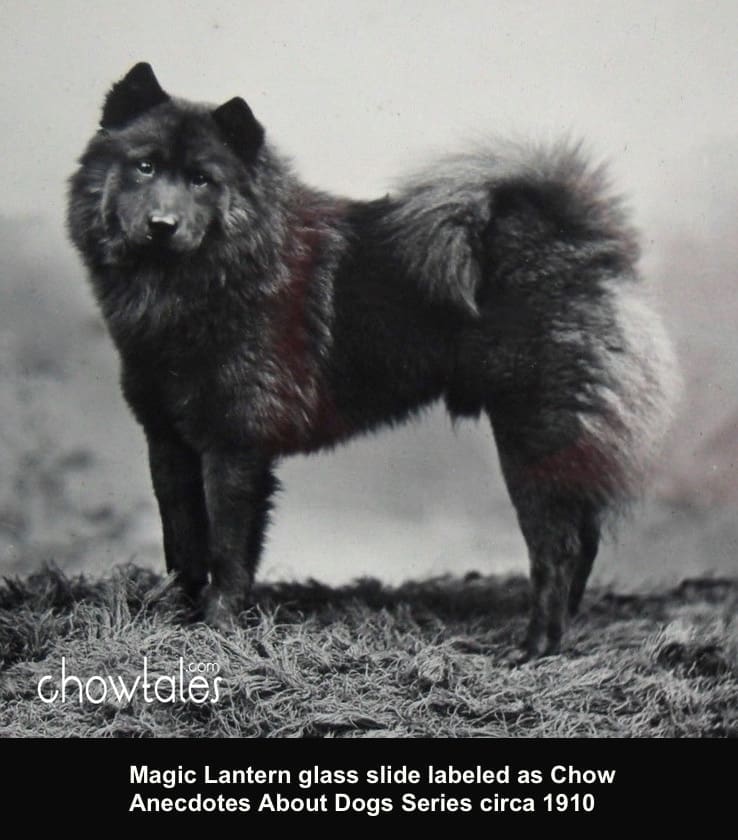

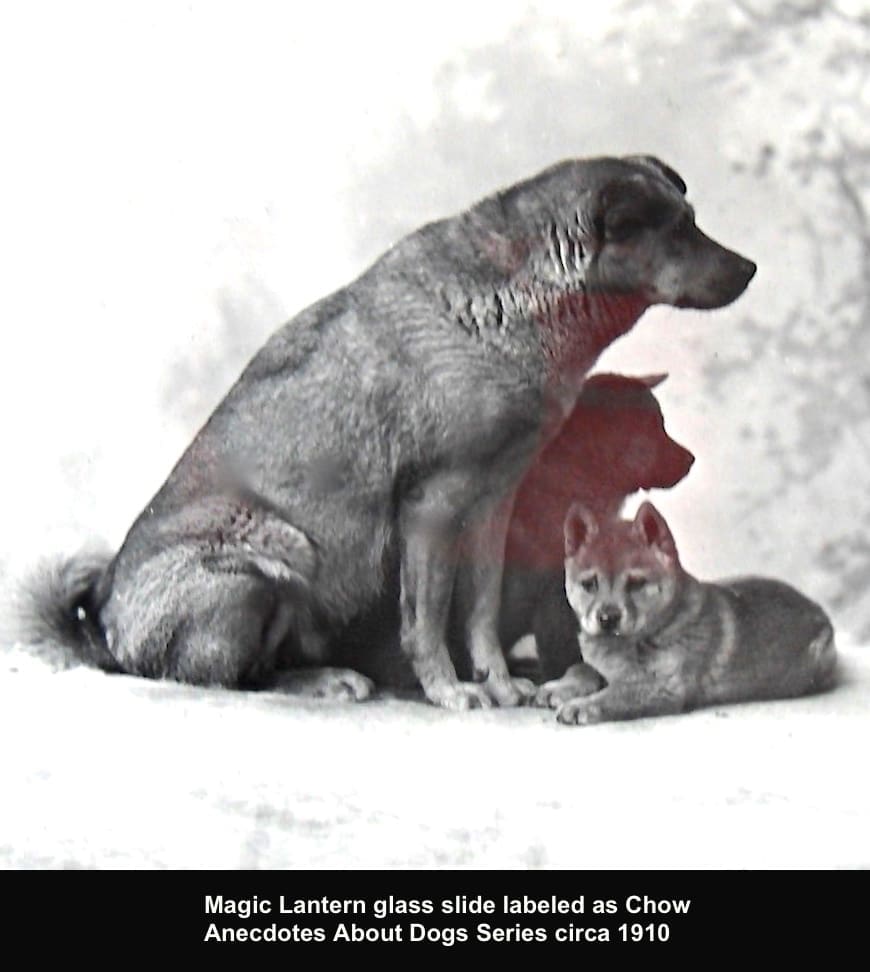
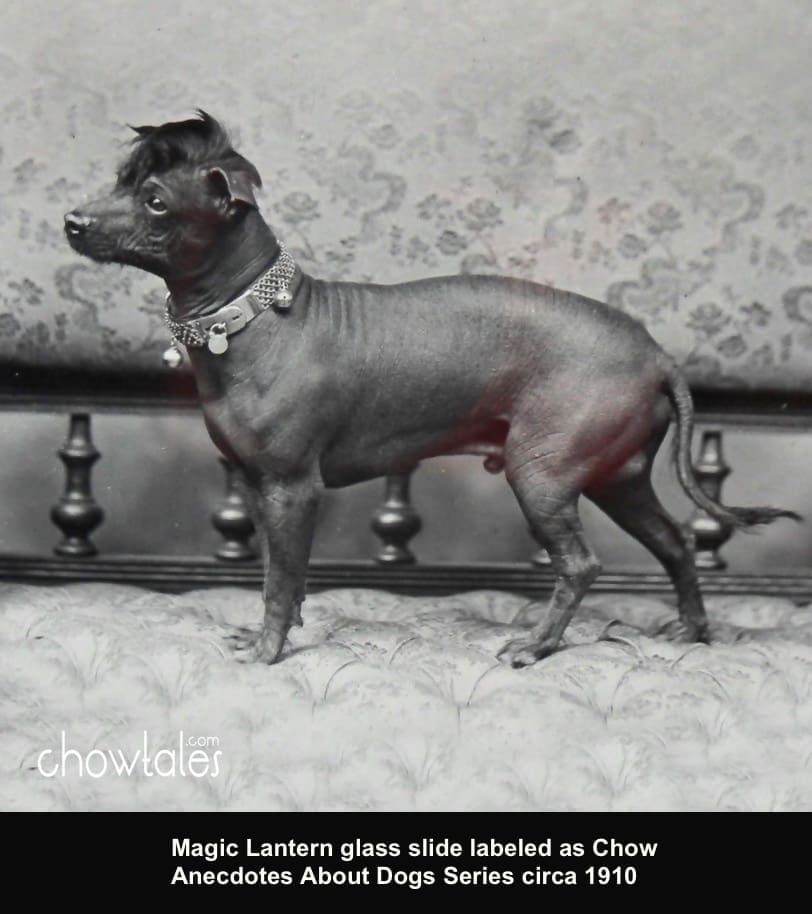
These 4 images are from a series of glass slides created back in 1910 called ANECDOTES ABOUT DOGS and the photographer was the very famous portrait photographer, Thomas Fall (1833-1900). Manufactured by York and Son in England. Each slide is labeled as being a Chow which I find quite interesting as the last two are clearly both breeds from Asia but today not considered a “chow”, but possibly a Japanese Inu breed and Chinese Crested. Each image is so crisp and lovely you just want to step into the photo to touch these dogs…the magic was in Thomas Falls skilled artistry when he created dog portraits.
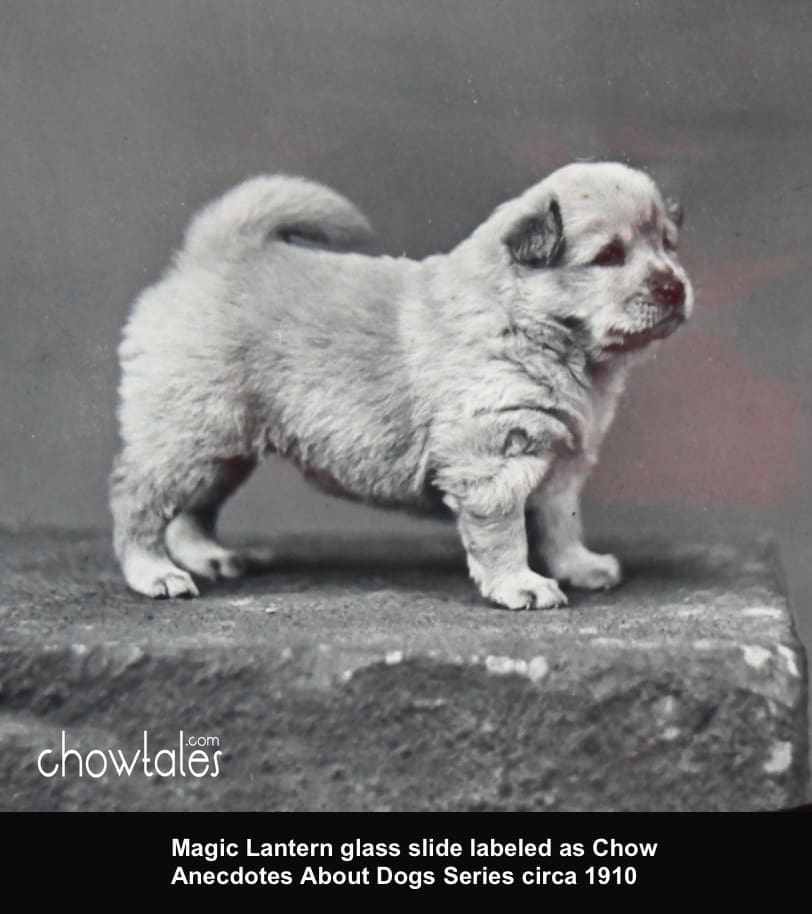
Thomas Fall was born on 19th October 1833 in Leyburn, Yorkshire. In 1867, Thomas Fall moved down to London to work as a photographer in the famous portrait studio of Elliott & Fry. By 1875, Thomas Fall had established his own photographic studio at 9 Baker Street, London. Thomas Fall specialised in canine photography and in the 1890s became well-known for his photographs of champion dogs. SOURCE
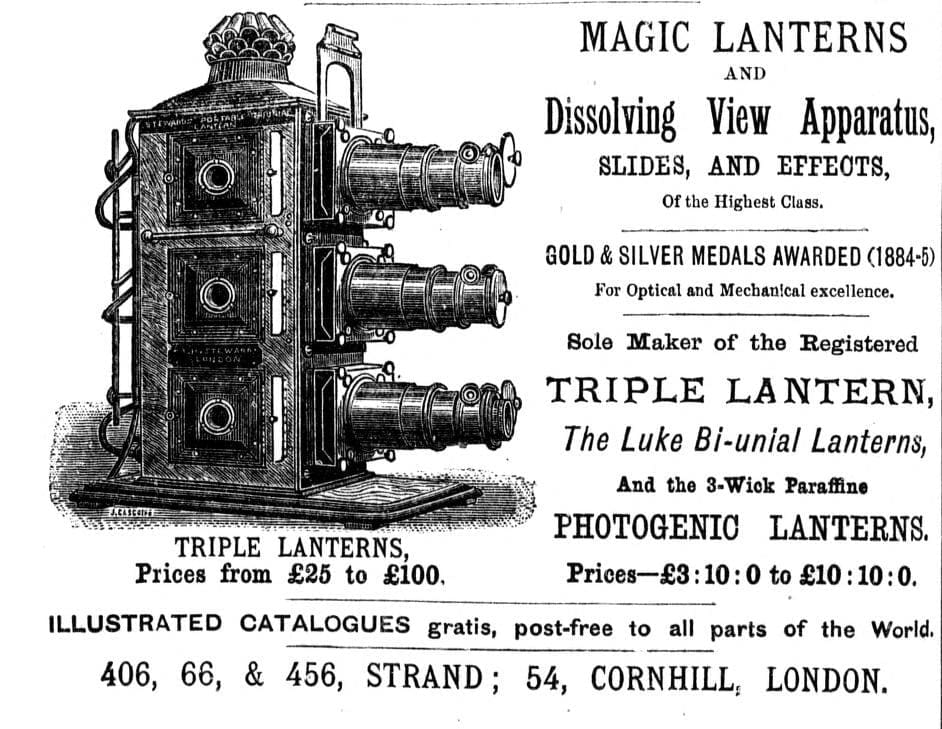
TO READ MORE ABOUT MAGIC LANTERNS AND GLASS SLIDES CLICK HERE





The adult dog with the puppies looks like what the Chinese call a Tang dog. There is a paper from Eric Omura you might find interesting, that explains the Tang dog link to the chow chow: https://kennellonfumun.kotisivukone.com/9
Thank you so much for the link SA!
Sprunki Pyramixed is one of the popular mod variations available.
The TDEE Calculator adjusts estimates for different body compositions.
I’ve been hunting for one of these antique lantern slides at estate sales for years — the hand-tinted ones from the 1890s are my white whale. Were the colored versions actually projected in shows, or were they made mostly for collectors?
What a fascinating window into the past — magic lantern slides from around 1910 must have been striking to see projected in person. It’s wonderful that someone preserved them and is connecting them to Chow breed history. Looking forward to the next installment.
I love these old slides! It’s so interesting to see the history of photography and how things have changed. Speaking of presentations, have you seen the new ASH 2026 guidelines? ASH hematology exhibitor prospectus
This is a fascinating look into early photography and the history of magic lanterns. It’s amazing how far we’ve come with visual technology! 7 Best Unscreen Alternatives in 2026
What a fascinating glimpse into early photography! The detail on these slides is incredible. It makes me wonder about other ways technology has advanced, like with an AI kissing generator. AI Kissing Generator: Turn Photos into Kiss Videos
The page explains how game data is stored and reused locally. 65439e3d.
A single run can turn a simple partner into a screen-clearing powerhouse. d6bfd5cc.
The labeling question you raise is the most interesting part of this set. It’s a good reminder that breed names on early commercial slides reflect the cataloguer’s assumptions more than any modern standard — York and Son were producing a popular series, not a scientific record, and a “Chow” label in 1910 could stretch across several Asian breeds. Thomas Fall’s background makes the crispness believable, though: someone trained in a London portrait studio under Elliott & Fry would know how to light a sitter, even a four-legged one. The detail about the slides being hand-labeled also makes me wonder how many other series from that era carry similar misidentifications that later collectors simply repeat.
That detail about the last two slides being labeled Chow but likely showing a Japanese Inu breed and a Chinese Crested really stuck with me—it’s a good reminder that historical labels don’t always match modern breed classifications. When I’m organizing odd reference finds like these for my own visual projects, I use Random Pokémon Online to draft randomized sets and keep comparisons lively, since its type and regional filters make it easy to sort variants quickly. Thomas Fall’s crisp 1910 portraits also make me want to slow down and study the lighting before I finalize any of my own reference collections.
Thomas Fall’s crisp 1910 glass slides really show how much care went into early dog portraiture, and the way he labelled these Asian breeds as Chows makes me think about how much breed naming has shifted since. When I’m working from old portrait-style images like these, I like to see what a modern tool can do with them, and zombietrend.art at https://zombietrend.art/ turns two portraits into AI zombie trend clips with 720P HD rendering for a fun contrast against that vintage stillness.
The detail about Thomas Fall labeling the last two slides as Chows even though they look like a Japanese Inu and Chinese Crested really stuck with me — it shows how fluid breed naming was back then. When I digitize finds like this, I use ClipLumi AI Shorts Clipper to pull the crispest frames into short vertical clips with auto-captions, so those 1910 portraits reach people who’d never see the original slides.
Thomas Fall’s 1910 ‘Anecdotes About Dogs’ slides are a great reminder of how crisp, deliberate portraiture can make you want to step right into the frame, and that same instinct for a memorable, self-contained scene is what drew me to the Tiny Desk AI Meme tool for casting a few friends into a viral NPR desk band clip. The detail that each slide is labeled ‘Chow’ even where the breeds look like a Japanese Inu and a Chinese Crested also shows how labels drift over time, which is a fun parallel to how meme formats get reinterpreted as they spread.