Rare 1926 Breed Publication National Dog Journal
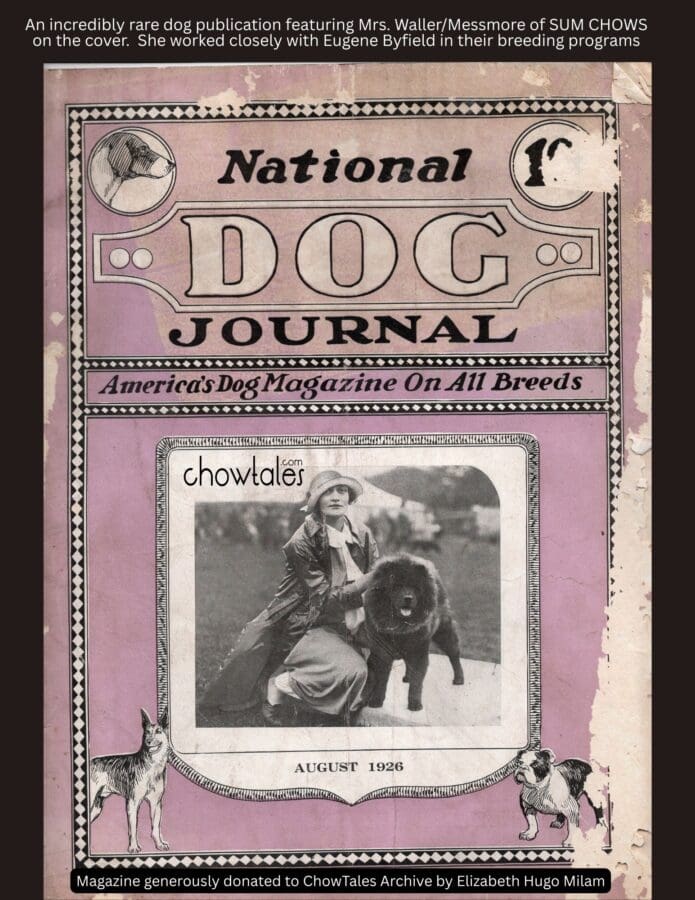
This incredibly rare 1926 magazine came to my attention quite unexpectedly when a Facebook friend, Jan, tagged me in a post to draw my attention to its rarity. The original post had been shared by Bulldog breeder, historian, and AKC Gazette columnist, Elizabeth Hugo Milam.

After a few messages back and forth, Elizabeth and I quickly discovered we had much in common. What began as a simple conversation about a rare publication soon revealed a shared passion for preserving the history of our respective breeds. That moment of realizing our mutual interest in canine history sparked not only a fascinating discussion about the magazine itself, but also the beginning of a new friendship.
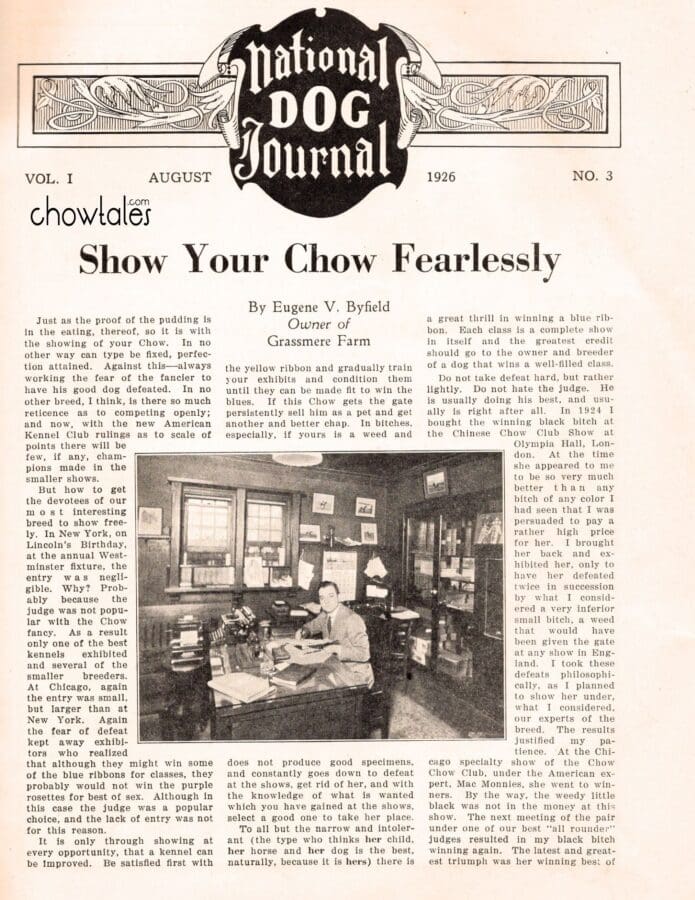
Elizabeth very generously offered to send this remarkable publication to the ChowTales Archive, a gesture for which I am eternally grateful. To date, neither of us has encountered another copy of this particular issue of The National Dog Journal, making its survival all the more extraordinary.

If any ChowTales followers happen to have copies of The National Dog Journal in their own collections—whether from this year or any other—I would be delighted to hear from you. Discovering additional issues would help shed further light on this fascinating and little-seen publication.
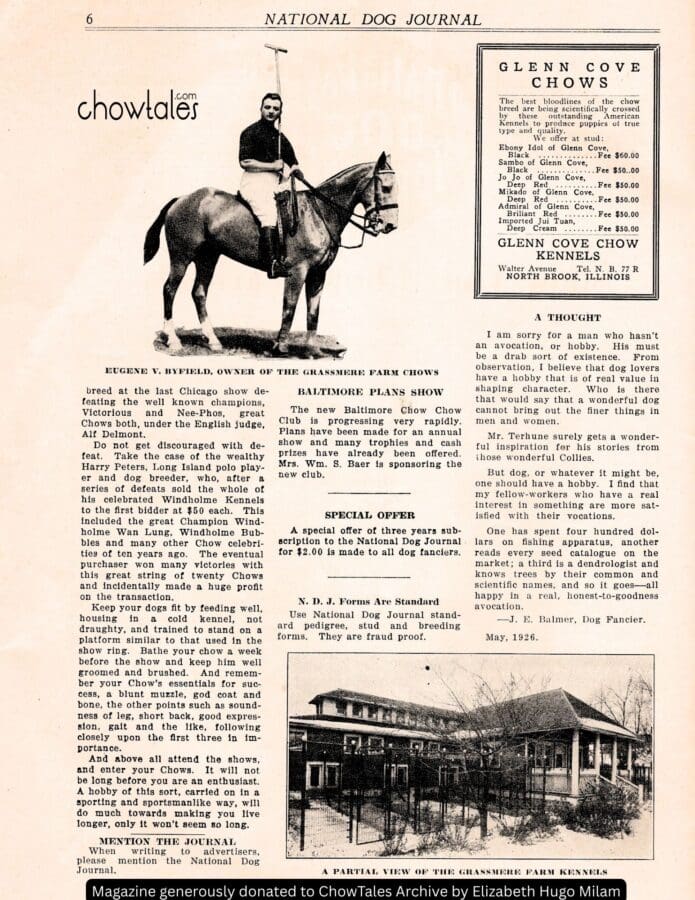
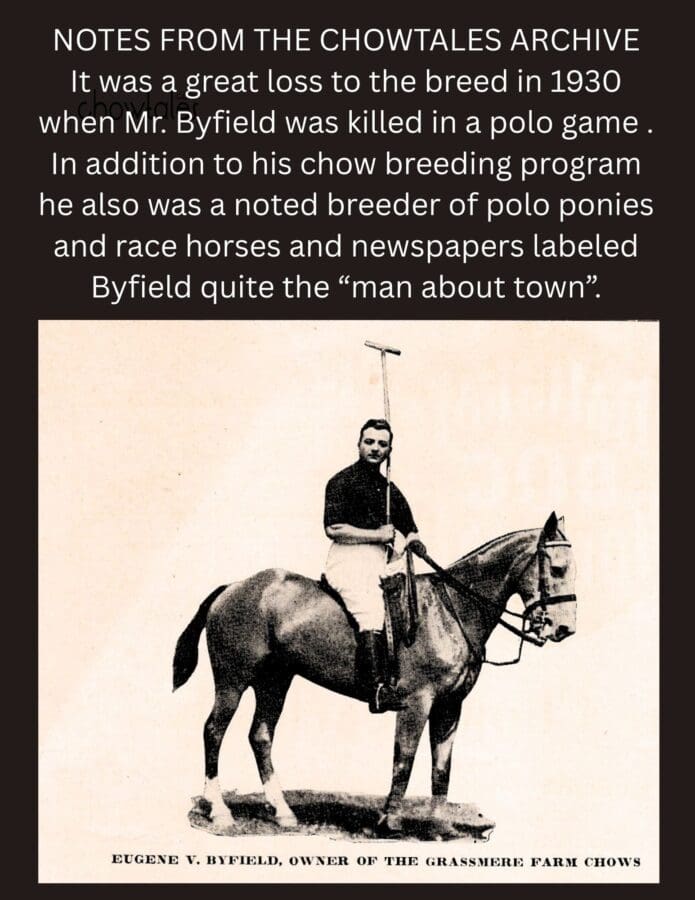
The cover featuring Mrs. Waller /Messmore is a treasure in itself. She was a close friend of the article’s author, Eugene Byfield, which makes her appearance on the cover especially meaningful.

Known to the dog world as Mrs. Waller /Messmore, she was one of the early foundation breeders of Chow Chows in America and an important voice for the breed during its formative years in this country. She authored numerous articles for the American Kennel Club’s publication, the AKC Gazette, helping to educate fanciers and promote understanding of the breed at a time when Chows were still relatively new to American dog circles.

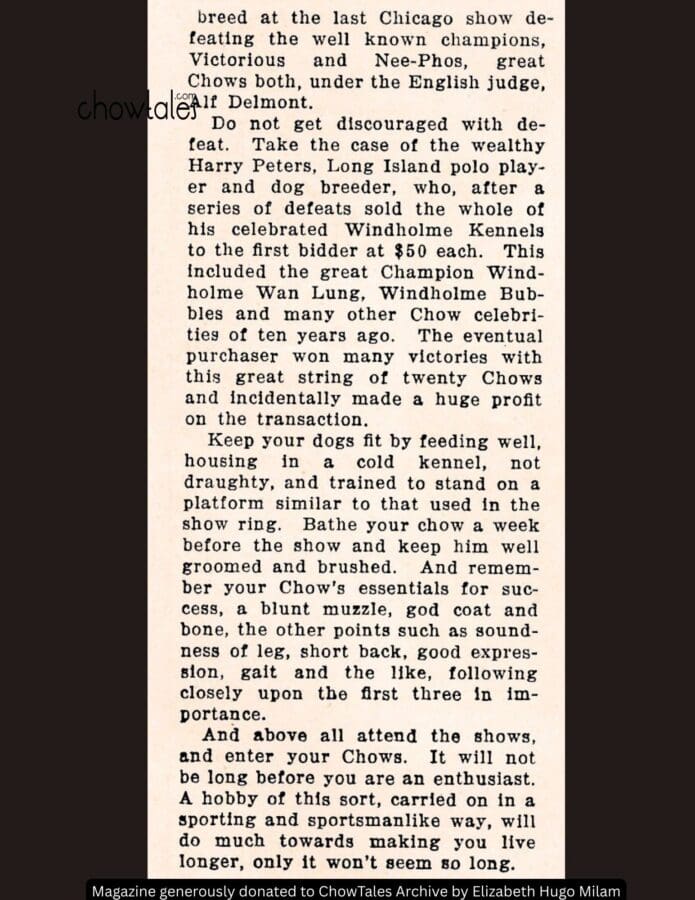
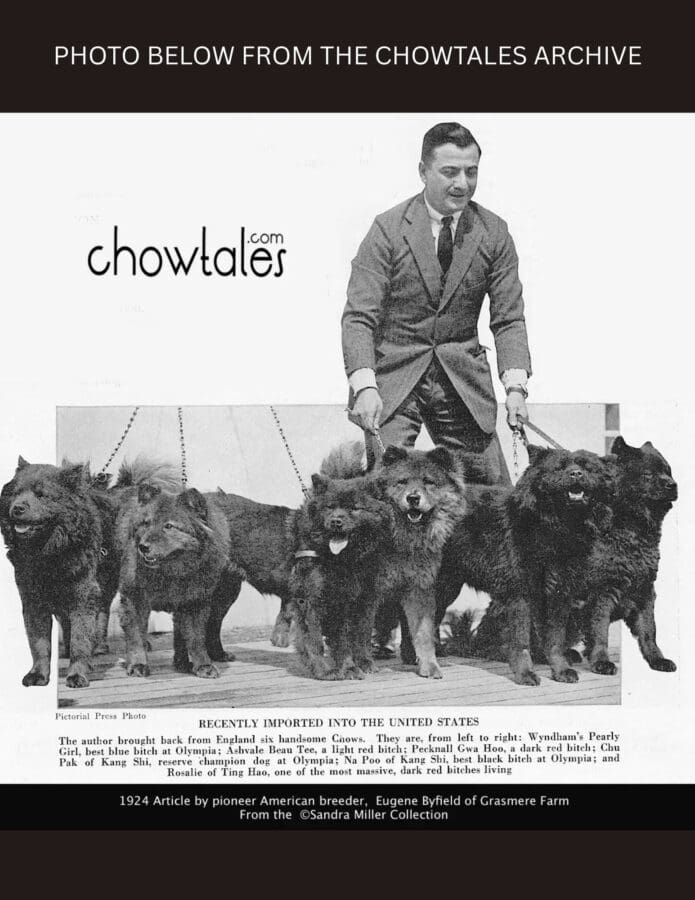
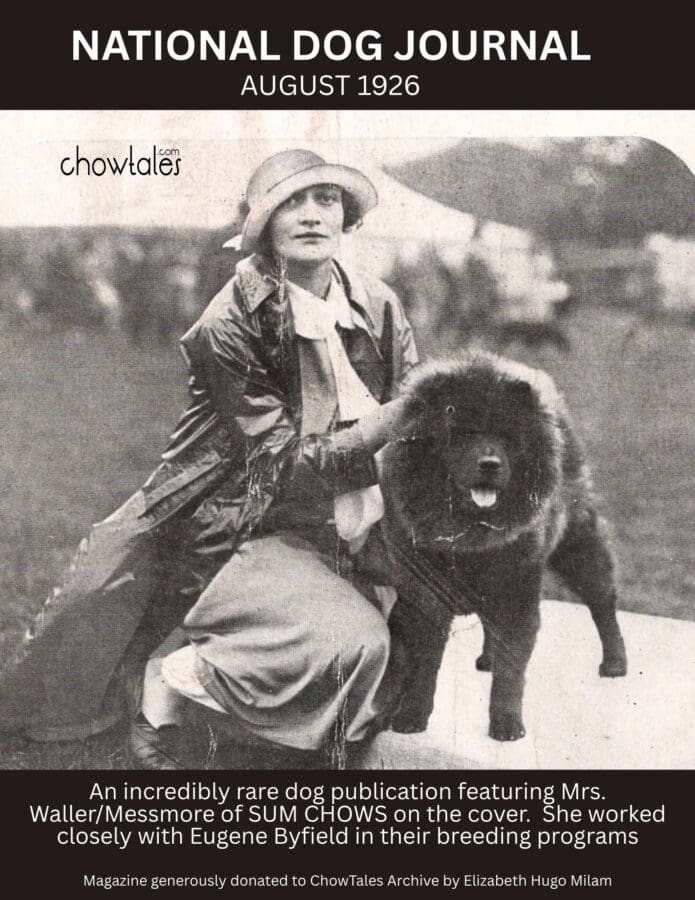
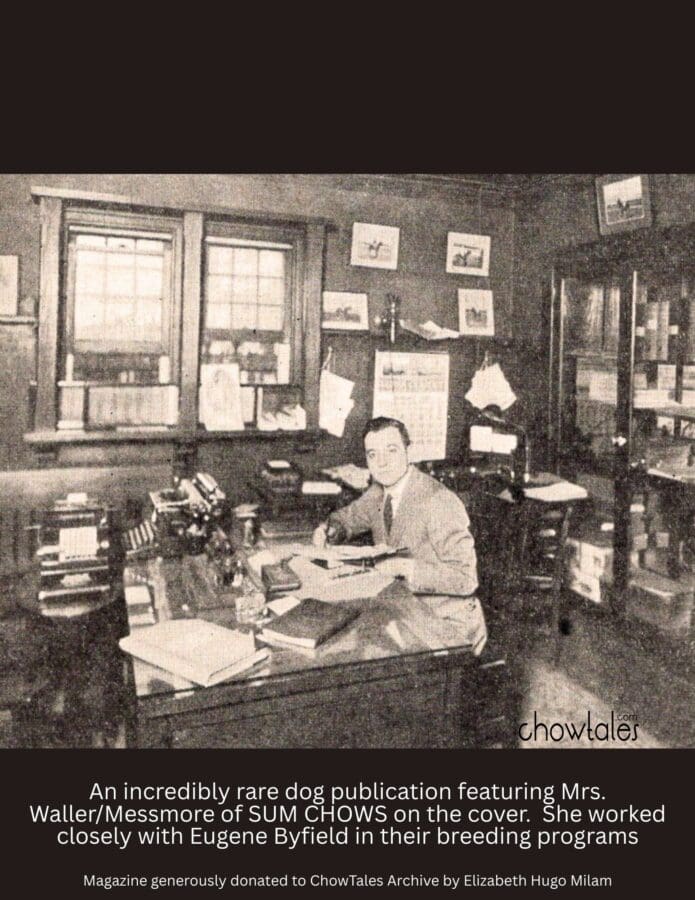
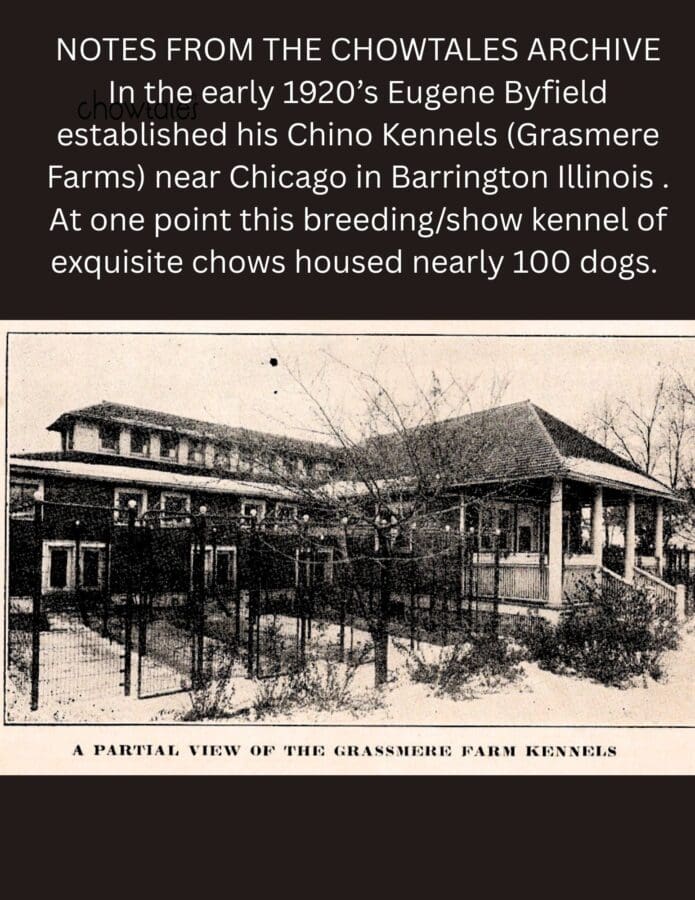
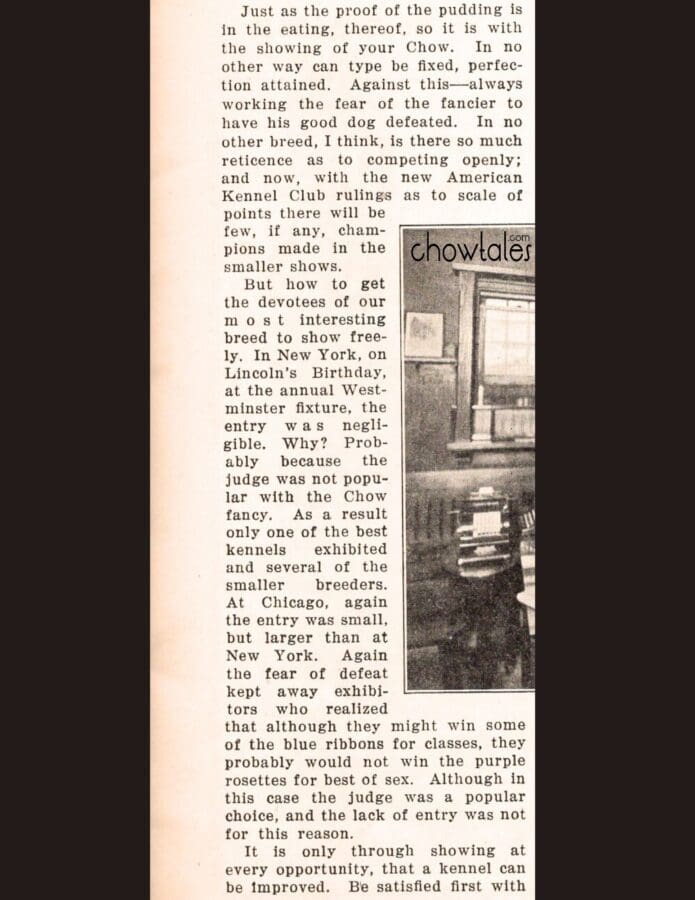
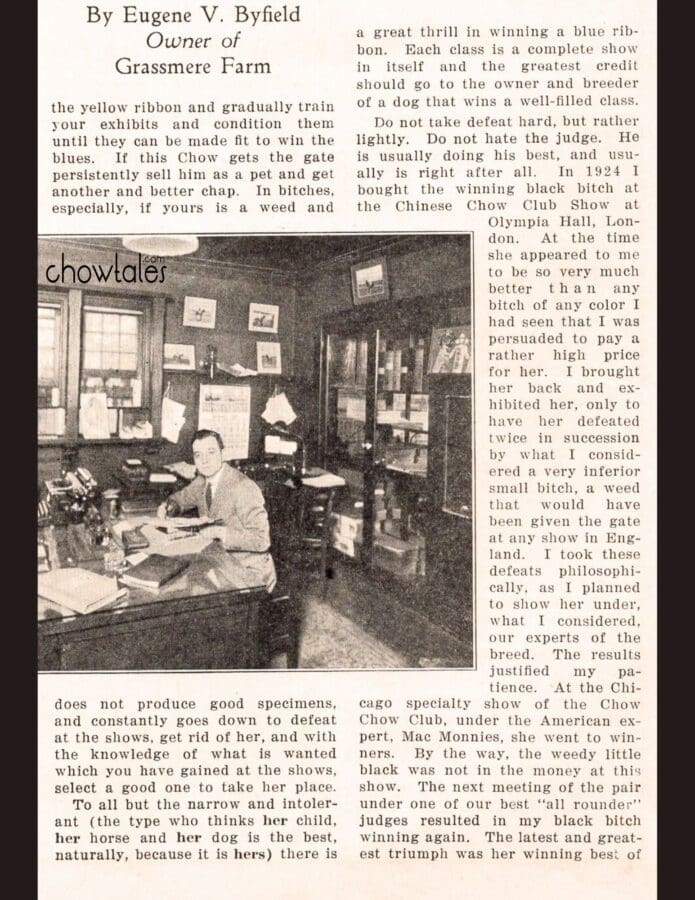
For easier reading, I have broken the two-page article into smaller sections below and enlarged the accompanying photographs so the details can be more fully appreciated.
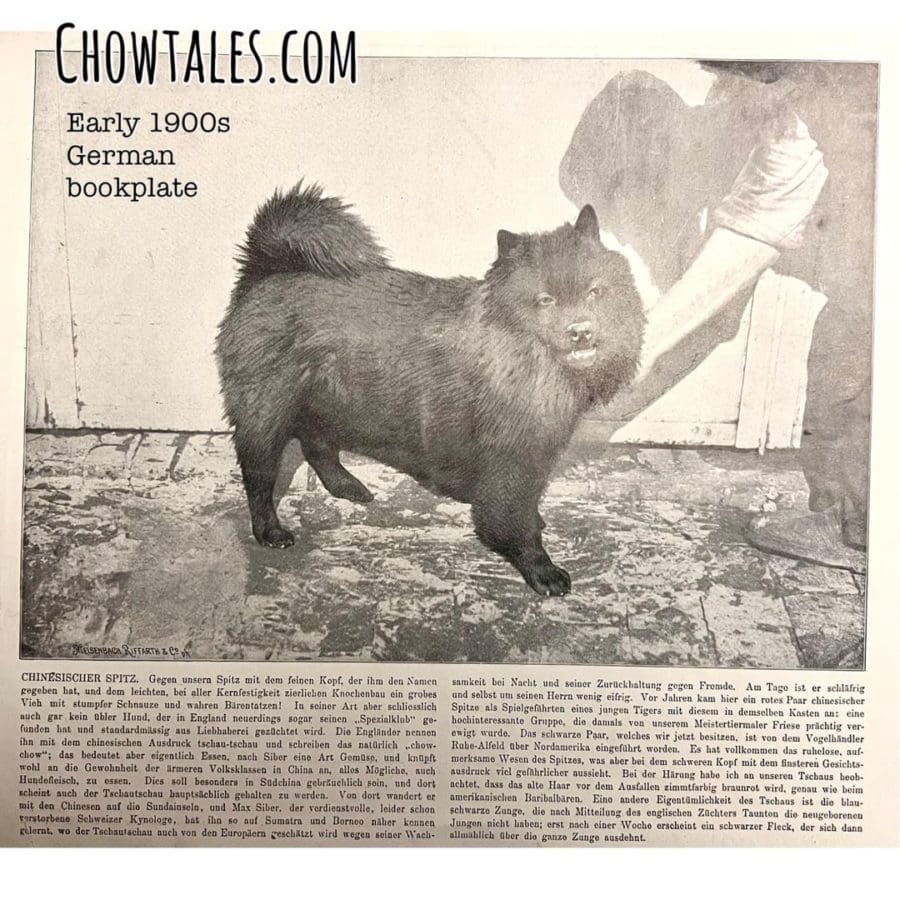
Late 1800’s German bookplate with a Chinese Spitz/chow photo

This late 1800s German bookplate shows a wonderful example of a very early Chinese chow. Thank you to Sandra Lindberg (a friend in Chinese Shar-Pei history circles) for the translation and to all those who generously offered to help !

This is such a very interesting article which had no date on the pages but Sandra’s translation pointed to the England Chow club being recently formed which I added in parentheses as 1895. Enjoy!!!!


TRANSLATION BELOW by Sandra Lindberg


As the German is already a little “stiff”, the translation probably does reflect that ;):

CHINESE SPITZ

Compared to our fine-headed Spitz with delicate yet sturdy bone structure, this rough animal with a blunt snout and true bear paws is quite different. However, in its own way, it is not a bad dog, and recently in England, it has even gained its “special club” (est. 1895) and is bred as a standard by enthusiasts. The English call it the Chow Chow with the Chinese expression “Tschau Tschau”, and spell it as “Chow-Chow”; but it actually means food, according to Siber some kind of vegetables, and probably refers to the habit of poorer classes in China, who eat all kinds of things, including dog meat.

This is particularly common in southern China, where the Chow Chow seems to have been mainly kept. From there, it migrates with the Chinese to the Sundanese islands, and Max Siber, the meritorious, unfortunately already deceased Swiss cynologist, got to know him better on Sumatra and Borneo, where the Chow Chow is also appreciated by Europeans for its vigilance at night and its restraint towards strangers. During the day, it is drowsy and not very active even around its owner.

Years ago, a red pair of Chinese Spitzes arrived here in the same box as a young tiger, as playmates. It was a highly interesting group that was magnificently immortalized by our master animal painter Friese at the time. The black pair that we currently own was imported by bird trader Ruhe-Alfeld via North America. It has the same restless, attentive nature as the Spitz, but looks much more dangerous with its heavy head and grim expression.

When shedding, I observed on our Chow Chows that the old hair turns cinnamon brown-red before falling out, just like with the American Baribal bear. Another characteristic of the Chow Chow is its blue-black tongue, which, according to English breeder Taunton, newborn puppies do not have; a black spot only appears after a week, which then gradually spreads over the entire tongue.


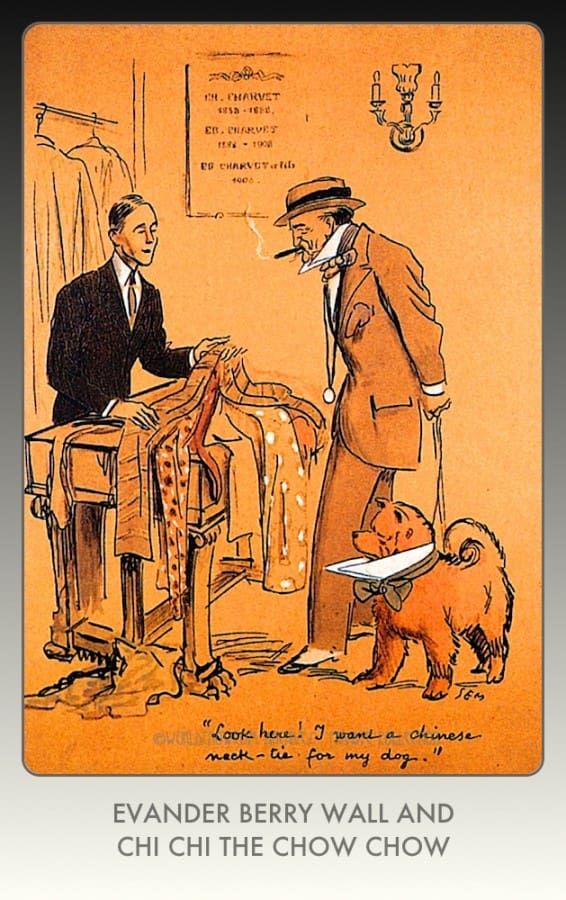
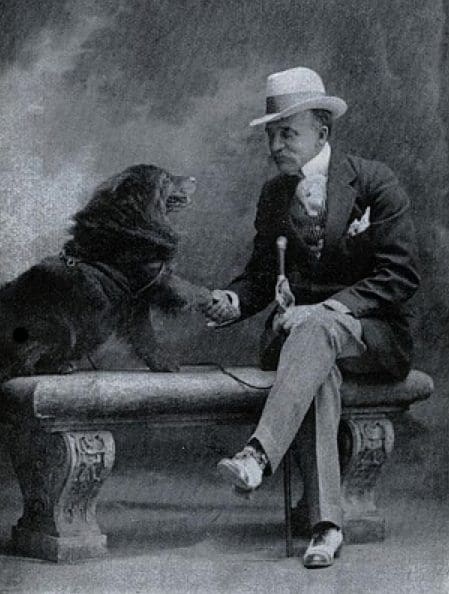
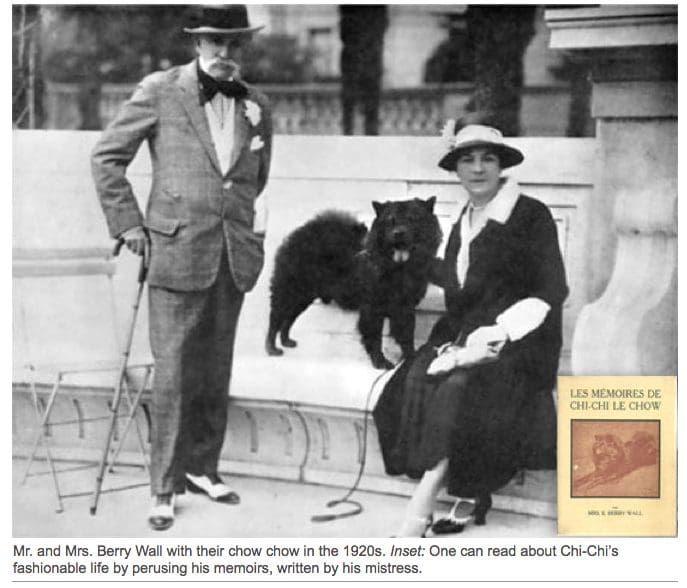
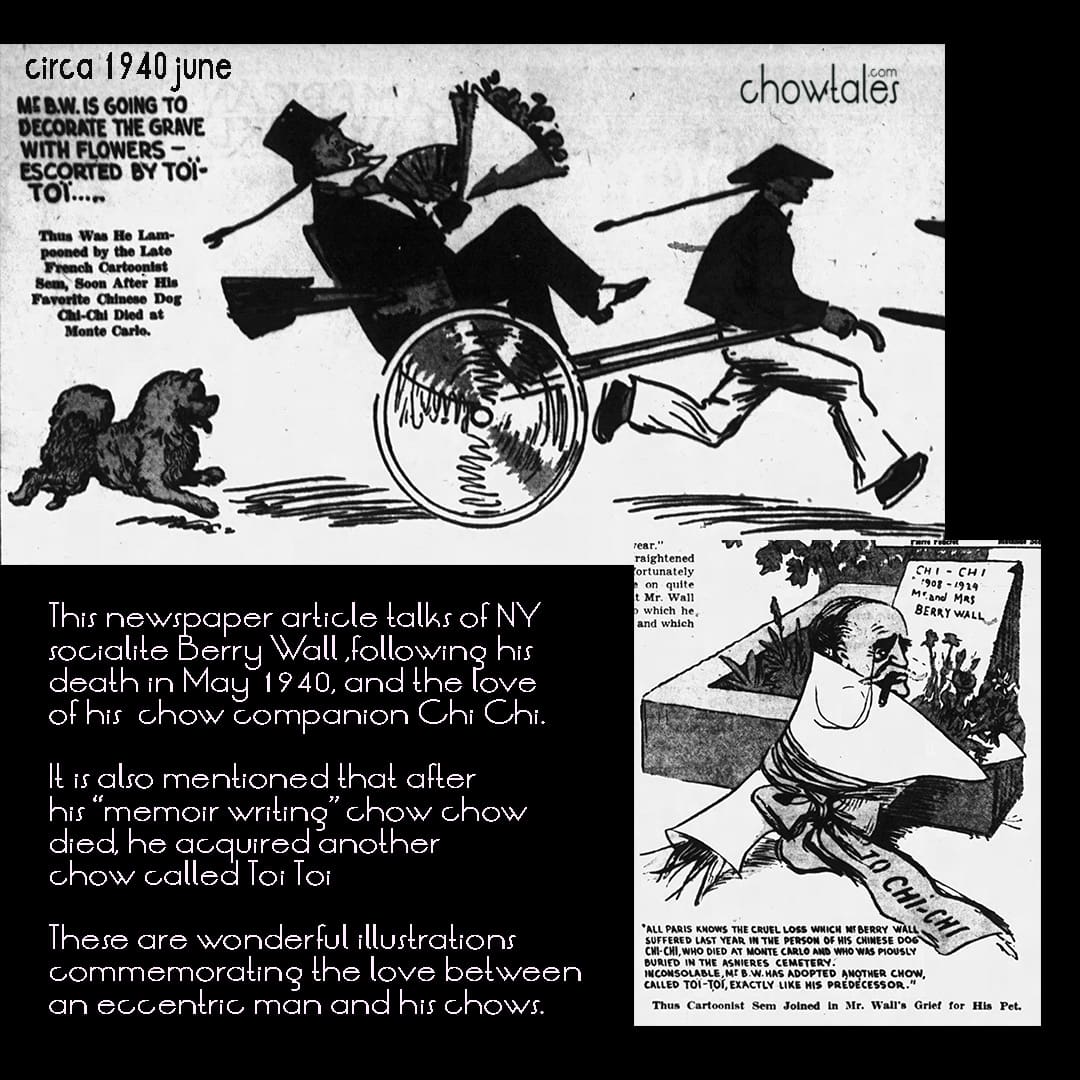
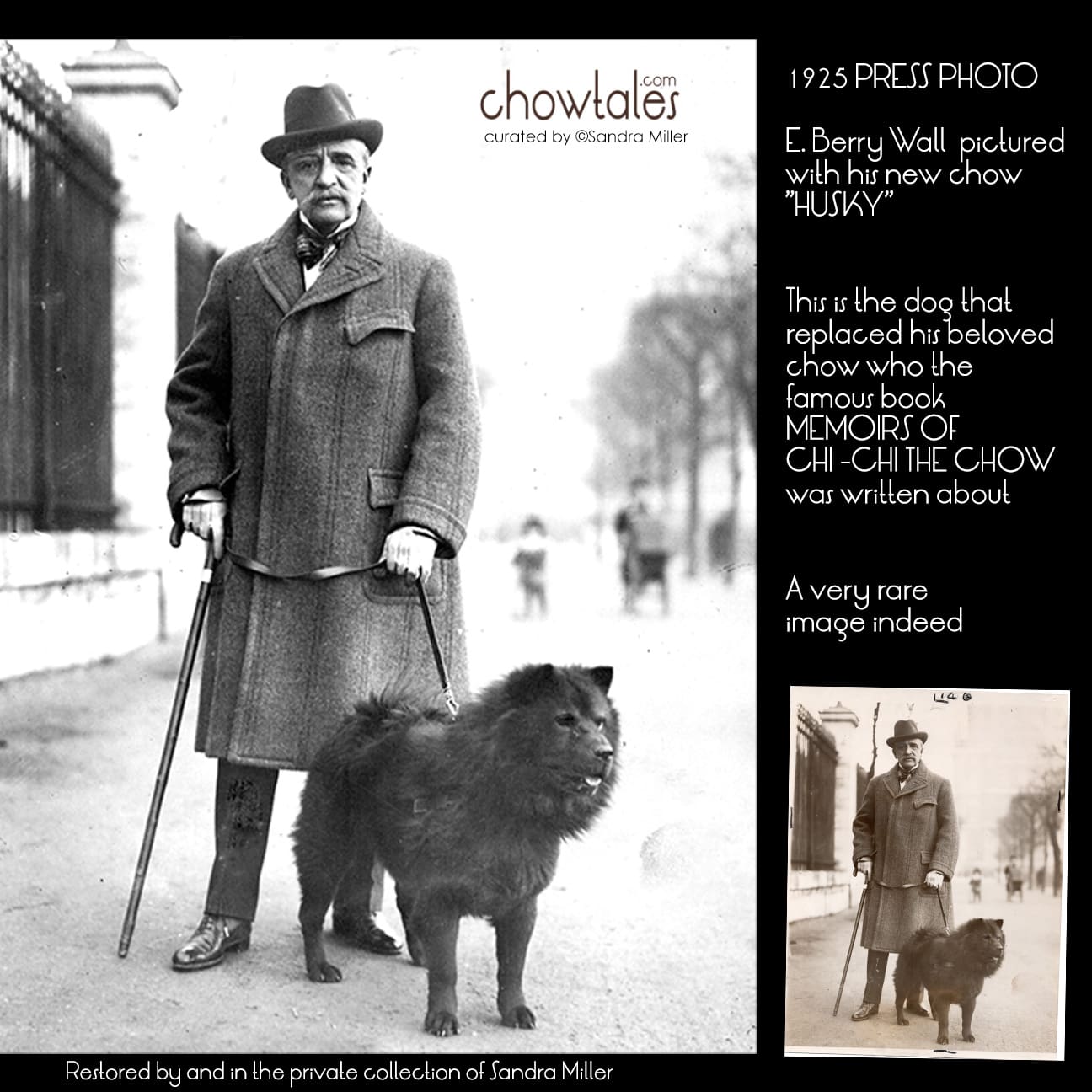
EVANDER BERRY WALL AND CHI CHI THE CHOW


CHOW CARTOON HUGE RES - Version 2EXCERPTS FROM THE NEW YORK SOCIAL DIARY  
Evander Berry Wall: King of the Dudes

__________________2309431

“There is one colorful society leader who, if he were around today, surely would have thought he had died and gone to heaven had he been in New York last week. Social arbiter, international clotheshorse, and legendary lover of chows, Evander Berry Wall would have sat front row and center at the fashion shows and at the Westminster Kennel Club Dog Show.

4780313_orig

A lifelong owner of chows named either Chi-Chi and Toi-Toi, Berry certainly would have applauded along with Martha Stewart when her dog, G.K., won top honors in the chow chow competition last Monday. Indeed, with his sartorial savoir-faire and natural love of display, he could have given the beauties on hand (of the human and canine kind) a master class in preening.

He was known as the Best Dressed American in Europe and in the US, and reveled in his title as “King of the Dudes” (“dude” meaning “dandy.”) He was considered a fashion pioneer and trend-setter who could claim, among other things, to have introduced the tuxedo or dinner jacket to Americans as an option to the formal tailcoat.

9070384_orig

Berry’s chows accompanied him everywhere – even to dinner at the Ritz Berry in a caricature by French illustrator, Sem. He is shown at Charvet declaring “Look here! I want a Chinese neck-tie for my dog.” (see caricature above)

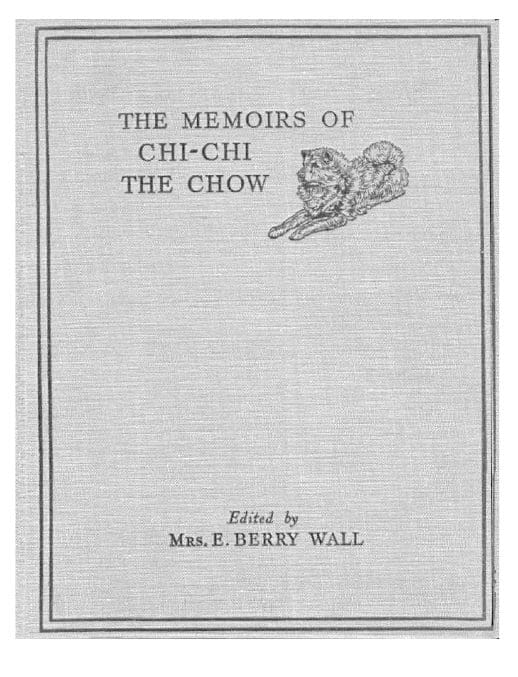
One can read about Chi-Chi’s the chow’s fashionable life by perusing his memoirs in this vintage publication

THE MEMOIRS OF CHI-CHI THE CHOW

89783_orig


CLICK COLLAGE BELOW TO SEE LARGER

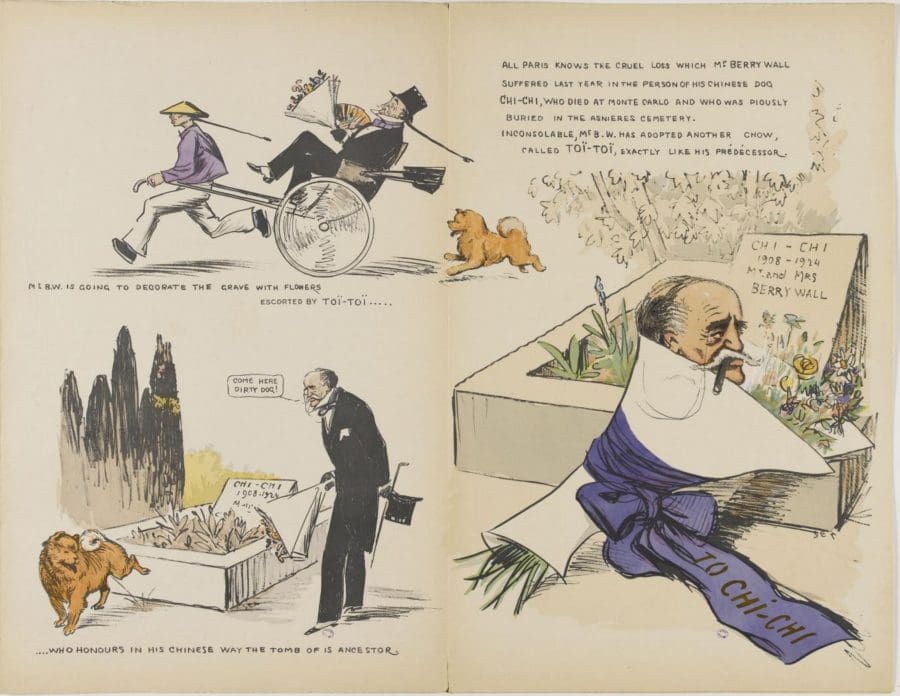
BELOW IS THE FULL CARTOON WHICH RESIDES IN A PARIS MUSEUM

In the Musée Carnavalet, Histoire de Paris Collection

__________________2309431